This is my attempt to reconcile my definitions and mores around the evolving forms of doping in social and virtual cycling platforms. From my perspective in cycling there are three broad categories of doping: pharmaceutical and supplement-based enhancement, e-assisted bikes, and advantages in the digital realm — e-doping.
The first category — mostly ingestibles or injectables, some as old as human consciousness itself — can deliver real performance gains, though often at the cost of bodily harm beyond the usual crashes or overuse injuries. These methods carry heavy stigma and tangible danger.
The latter two — e-assist and digital doping — carry far less physical risk (aside from the occasional speed-related incident), yet they come with their own significant stigmas.
In this first part of a two-part post, I want to explore some of the digital methods cyclists now use to gain an edge.
Before diving in, I have to confess the ongoing cathartic grip of my personal struggle to decide what I truly believe is right or wrong — more specifically, what I define as cheating. This has been a lifetime exploration. I’ve examined every side of the argument and rarely reached any firm conclusions. It’s a akin to the “little white lie” hypothesis: if it harms no one, protects someone’s feelings, provides a benefit, or eases pain, shouldn’t it be acceptable? Or does the old adage still hold — that in cheating, you’re only really cheating yourself?
If you’re a purist, any advantage beyond your personal baseline of purity is cheating. If you believe every tool that doesn’t break a written (or unwritten) rule is fair game, you can power forward with little guilt or introspection. At sixty-plus years of age, I still don’t know exactly where I stand. So this post may be an exercise (pun intended) in deciding whether to embrace or discard some of these new digital-world tools.
Digital platforms — from Strava to Zwift — are rife with doping opportunities. Some forms of digital doping sit comfortably inside what most people consider acceptable advantages. Real-world drafting or favourable winds often produce KOM records in both the real and virtual worlds. Others are considered verboten: weight doping on digital platforms, or e-bike records that displace genuine unassisted road efforts.

Early on as a solo-cyclist measuring my efforts against others was never a need or thought. When I first started tracking my rides, time on the same route was the only metric that mattered. Traffic, detours, quick stops, flats — none of it factored in. That most simplistic method, still feels brutally fair to me (in a Scawenager / Conan-pushing-the-mill-wheel kind of way). All that counts is the end result.
With age came knowledge, comprehension, and greater resources. Technology advanced and became accessible. Those forces collided in my quest to quantify my efforts more accurately, and with that came a change in mentality. More data points meant more opportunities to see improvement. I began seeking reward for even the slightest gain in any measured metric — basic dopamine response: do better, feel better.
As the gains grew smaller, so did the increments of measure. More points — more measures — more opportunities for reward. Like a ladder with more steps per foot, one still climbs to the same height, yet achieves many more defined goals. “Every one gets a trophy” if every micro achievement is recorded or more categories for success are created. This new environment fed and enabled my need for positive reinforcement. Is the need itself harmless, even a potentially beneficial driver? If so, then maybe digital doping could be acceptable. It pushes you to achieve more, or at least endeavor to persist. What’s the harm? But in an interconnected “social society”, when I use digital doping to seek a reward whilst comparing myself to others, are those actions still so innocuous?
That begs three more societal/behavioral questions. First: if there is no victim, was there a crime? Second: the Lance Armstrong conundrum—if everyone is doing it or can do it, then isn’t the competition still fair? Third: I’ll use the most notable fan-fiction example, Kirk and the Kobayashi Maru—a cheat for which the character is both reprimanded and rewarded at the same time. In the end we are all guided by our own moral compasses with vastly different true norths, living in a world where truth is hard to define and perspectively malleable. One man’s nobility becomes another’s foolishness.
For my personal exploration of where my belief system rests, the virtual cycling platform of Rouvy presents the perfect universe. At first I would ride Rouvy’s routes with the least number of online riders, then ride the same routes again and again, tracking my efforts and seeking to improve. Riding along, ignoring route records, looking only at time, wattage, and heart-rate data was good enough. But as the platform grew and evolved, it seemed to expand upon the stick-and-carrot system to motivate its users. Always reticent to change, I was slow to respond to the carrot. Eventually I began trying to obtain career points as a goal, then I began noticing other riders’ performances on a course, next looking at the leaderboards for comparison to my efforts. Slowly I was hooked. Rouvy was providing me with the aforementioned dopamine rewards for my improvements—go faster, spin more miles, climb in the rankings—simple. But as with many a good thing, a small taste quickly morphs into full-blown addiction. As I started to notice other riders passing me at seemingly light-speed, my curiosity began to rise. Now, watching live, I was calculating their weight from their W/kg to their current output.
Next I began looking at results for people my age, and then came the ultimate Rouvy “nail in my coffin of obsession”: a friend request. The first request I received struck me as strange. I had never partaken in any events and strayed away from routes populated with many riders, so who would slow old me attract as a friend? After a few days of thought as to whether or not I wanted to take my rather anonymous activity and join an online group, so to speak… Having successfully navigated my entire existence (until this point) void of all social media, why would I engage in a clique membership now? Disregarding a spotless history of naysaying, I took the leap, never realizing that growing a large friend base is a goal of some Rouvy riders.
“Friends.” Accumulating friends seems to be either a paid-user phenomenon or a regular participant’s social-media ego-driven desire to create a large group of followers. My first Rouvy friend was likely the former. I say this because when completing my first ride after accepting his request, I was presented with the results of my “new friend’s” stats. After mentally recovering from seeing this rider’s insane power and speed, a quick search revealed him to be a top-five rider on just about every route. Rather than giving me a goal to strive for, this guy just soul-crushes—merely by riding (or maybe even breathing).
My experience of the Rouvy world was shifting. Not only did the fast guys exist outside, but now they were unavoidable inside as well. The major difference is data, of course. Strava provides it outside, but not as a heads-up display as he flies by. Rouvy adds that science-based reality check. So down the rabbit hole I went, noticing riders’ stats and styles of riding in the virtual world, comparing my efforts to those who seemed similar in age and ability. Then I added comparison riders to my rides. First I noticed being passed and dropped by riders with similar power outputs, so I thought it was about rider weight. Soon I realized there were other factors.

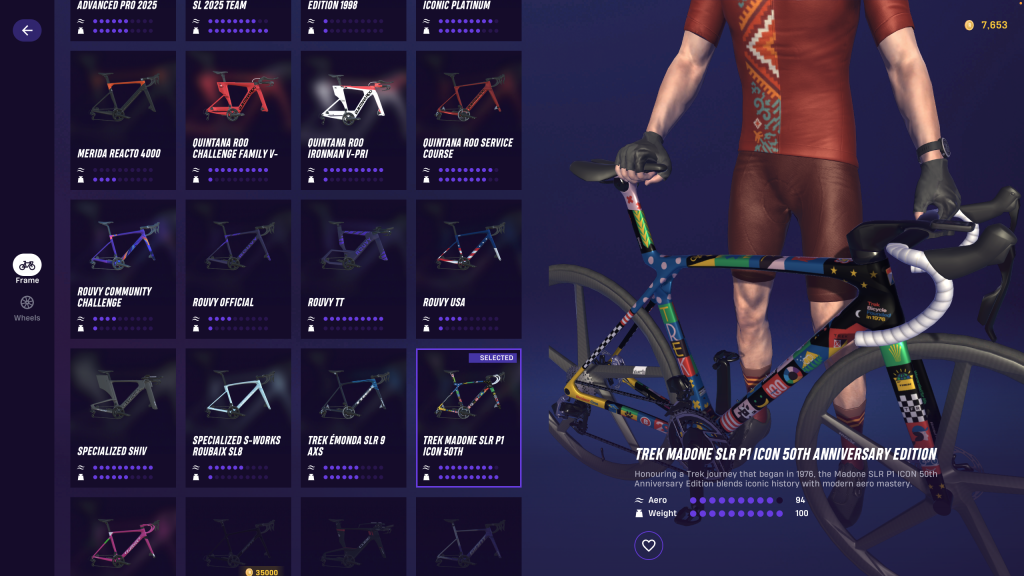
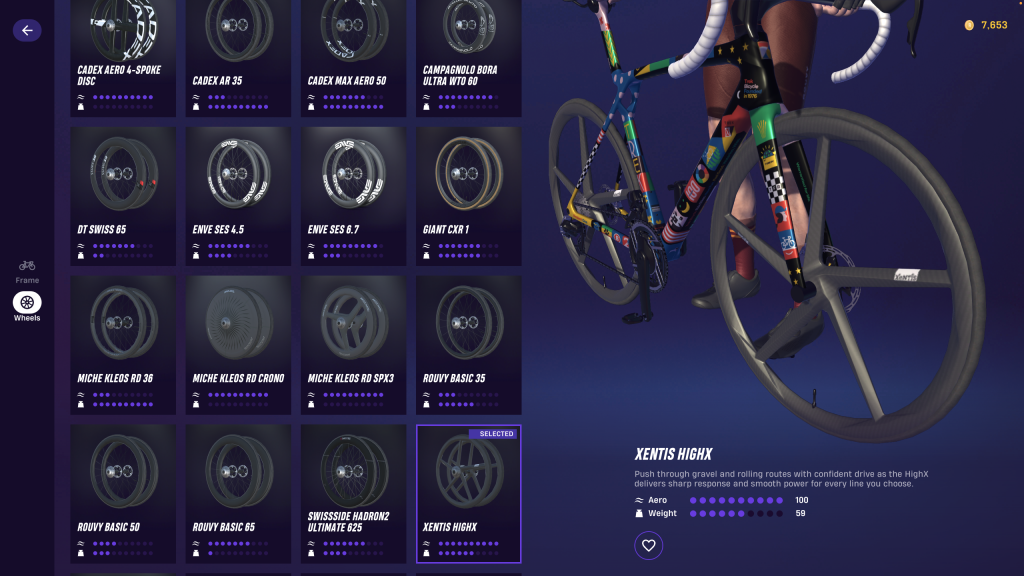
Enter Rouvy coins—“equipment, drug, and fashion money.” I began to take notice of the performance gains of riders passing me on tri-bikes and aero wheelsets with W/kg outputs less than my own. Still must be their weight on the climbs, right? If I’m much heavier, my gain on the flats would be small and equipment choice couldn’t matter that much. Well, Dorothy, I’m not in Kansas anymore either—because of Rouvy Analyzer, the online tool folks use to compare their equipment setups and maximize their results. With the discovery of the Analyzer, let’s just say that with fire in my pocket I quickly spent all of my accumulated coinage. Wheels and frames were carefully compared and shopped for. Now, before every ride I began consulting the Analyzer and choosing my best available setup for the route, and the results were immediately apparent: I was instantly faster. Someone, anyone, please help me get the needle of this new addiction out of my arm. They (Rouvy) hooked me with digital upgrades, and I justified my performance improvements with this logic: “In the real world, maybe I just bought a better bike.” Accepting gains that I haven’t earned doesn’t usually sit well with my moral stance, but what the heck—it’s just me lying to myself in a virtual world. No harm, right? Putting the ethical question aside and reveling in my newfound gains did come at some cost, however. Now with each ride came the added drama of checking the Analyzer and choosing the best equipment. Then, with all of this added effort, the prep for a ride indoors was beginning to approach that of an outdoor ride. But this was just the beginning; the spectre of full-blown digital enslavement loomed large.
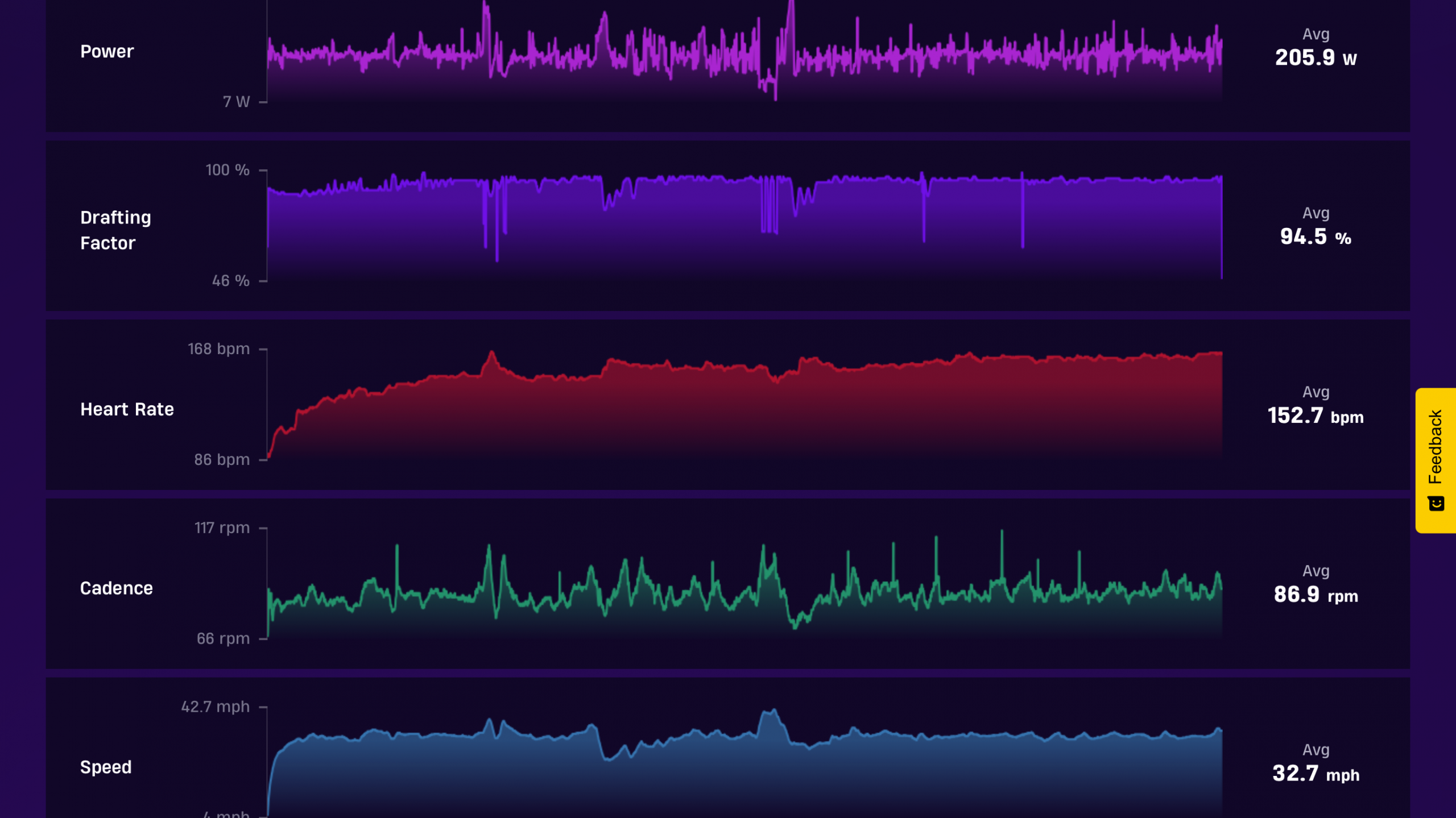
Even now, armed with the best frames and wheelsets for most routes, I was still questioning the results of similar riders and how they were putting my efforts to shame with similar power outputs. Pedals spun, and with the passing of time came additional friends—more requests appeared and I continued to accept. Having more friends fed my new, ever-persistent need to compare and compete. Now the quest to understand the how consumed me. Could they be weight-doping? Could their trainers be woefully inaccurate? Or are they just that much stronger? One other possibility is that they were setting these times during crowded races and benefiting from some insane drafting. Digging into my theories using my newfound friends’ ride data, I struck gold—not Rouvy Coins, though. The data showed drafting factors (of some of my closest would-be competitors) were always around 96%, even outside of race events. How? How do they do it?
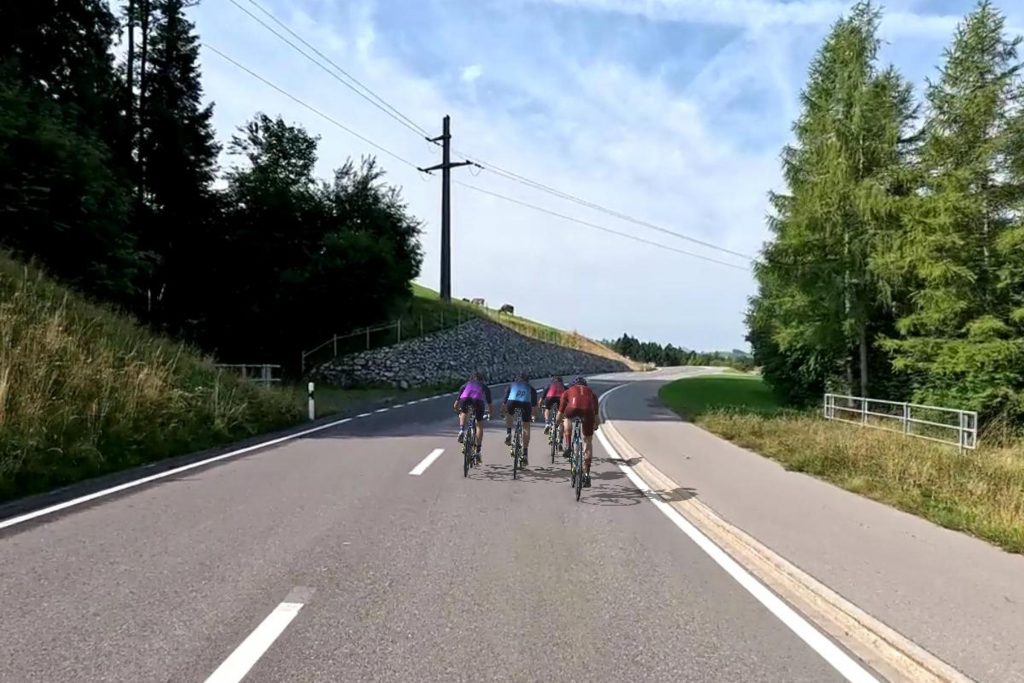
Well, they have virtual friends… Rouvy’s Pacing Partners. The app allows for up to three partners who pace in front of you throughout your ride, providing a consistent drafting benefit. The pacers are allowed in ride mode, and your results while using them are recorded as normal efforts. In other words, you get full credit for the added benefits they provide. Your improved results are your results for rankings and challenges. No flags such as “rode at 30% reality” or “stopped for 10 minutes” are waved. You look magnificent, darling. So, back to the real-world examples from which Rouvy adapts its logic: if one rides a Strava segment with a 20 mph tailwind or is in a group drafting the entire segment, they are still ranked no differently from a lone solo rider in a headwind. Fair or not is really a matter of opinion and a matter of the reality of the many variables (see myWindsock) outdoor cycling entails.
My question is… in a virtual environment, do we need real-world advantages without real-world disadvantages? Here my inner arbiter of fair struggles. Simply ignoring other app users/riders and competing only against my own metrics is the solution. But in reality, my humanness is always goaded into a “fair challenge.” It’s in our nature to compete. Is virtual doping in competing fair? Is the gamesmanship required to win a Grand Tour fair? All of this boils down to one thing: knowing the rules and utilizing them to your advantage. So the question is, do I really want to compete in a game-like virtual world, or ignore the noise and just enjoy my ride?
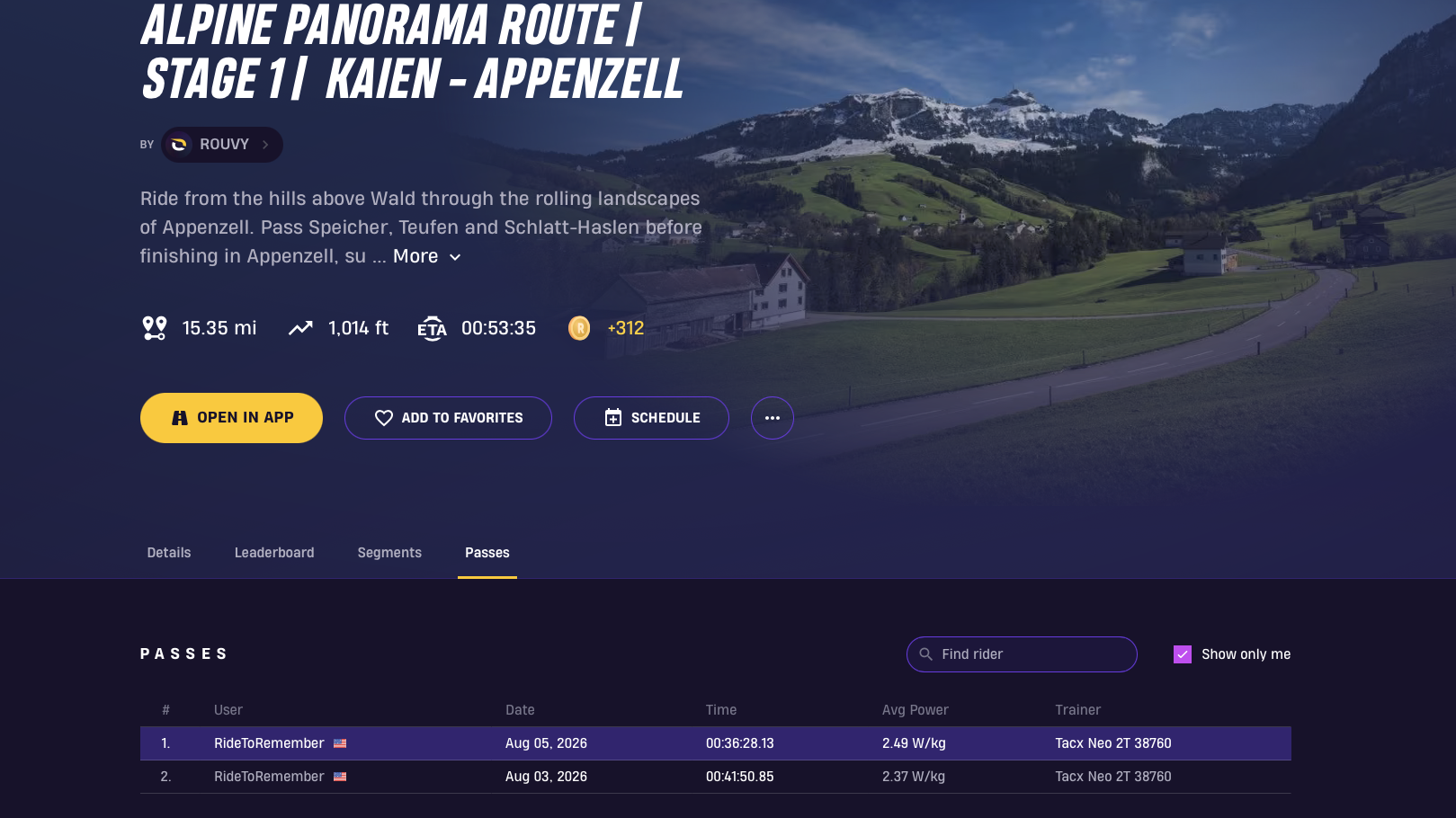
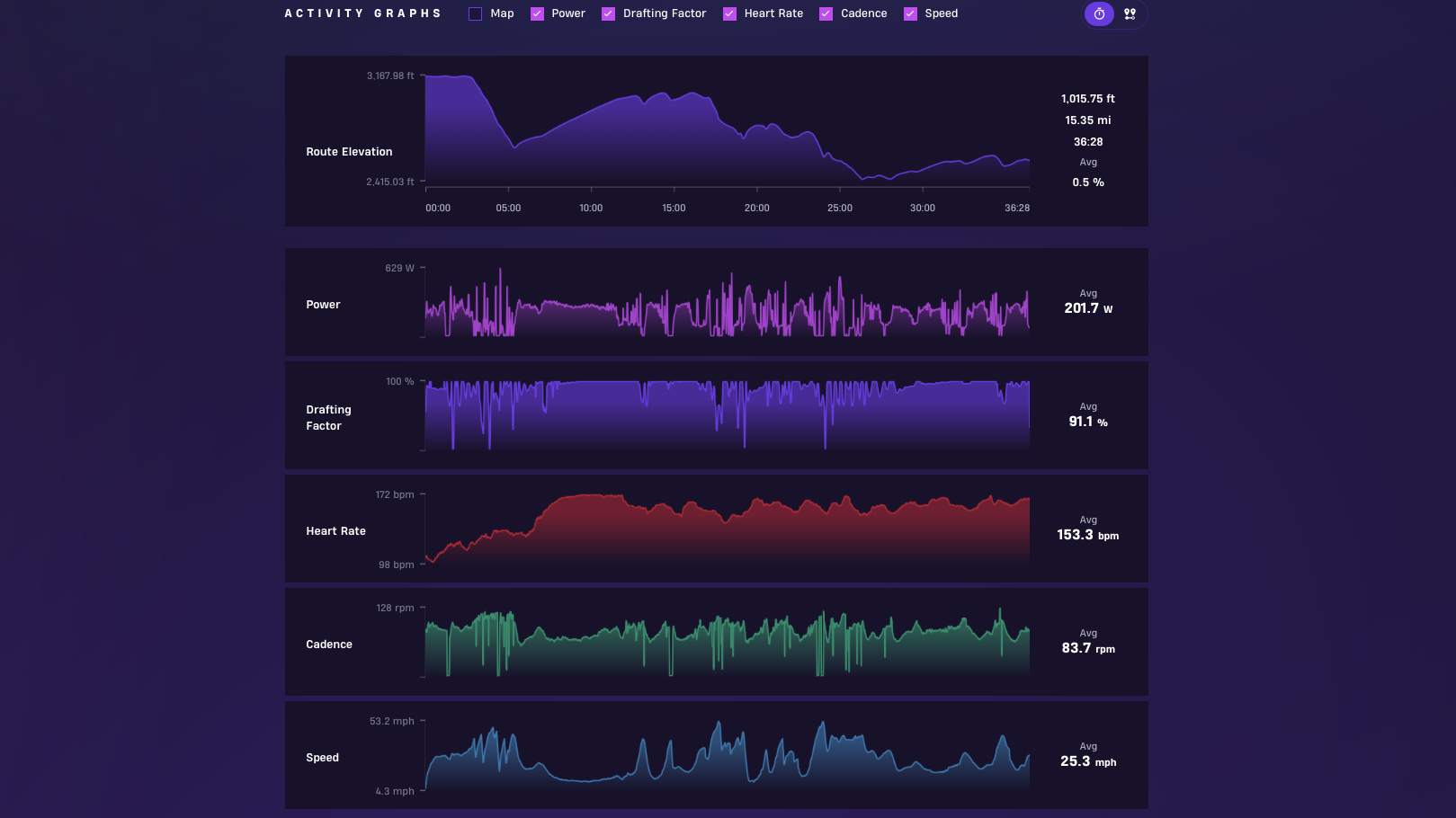
To help with my quandary and put to bed the extent of the doped advantage, further anecdotal testing was in order. I joined two Rouvy Challenges. In one I partnered up with my max allowable pacing companions—Emma, Anna, and Will. For the other I rode as I was birthed: solo. For a few rides I was a star, moving into 3rd and 4th place against my 10 or so friends and significantly climbing in the overall rankings. The control group (challenge) proved that I, however, was still just me. To put the gains in an apples-to-apples test, I rode the same route with and without my friends. Without, my draft factor was 8.3%; with them it was north of 91%. This equated to an almost 4.5-minute gain in time and a significant boost in the standings.
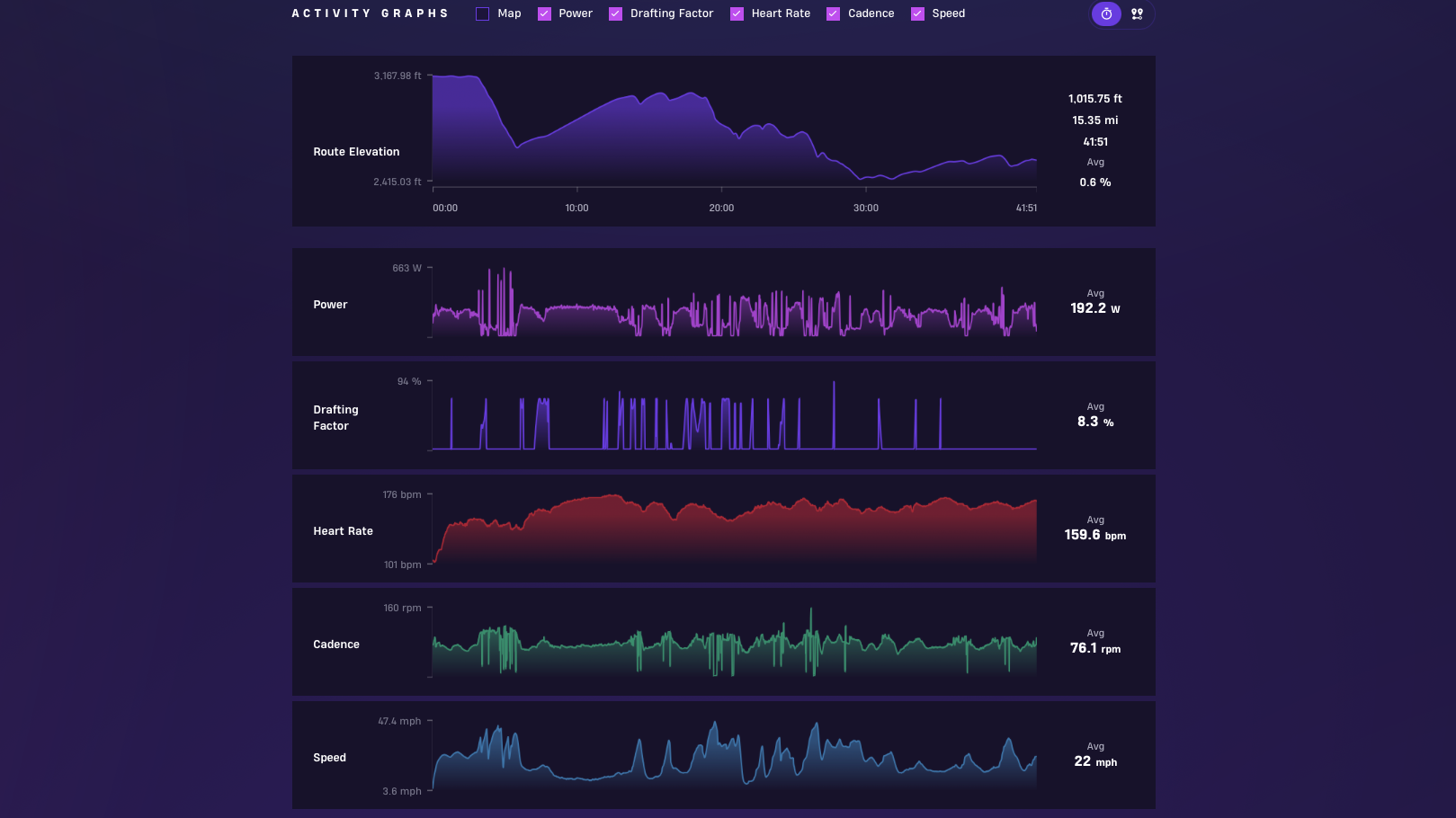
One would think that in conclusion I would love riding with my new friends, but alas, I am saying goodbye to the group and my Kryptonian gains. I’ll stick with the equipment addiction for now, but the free wind and speed provided by my pacing partners seems a bridge too far. As for my lifelong self-debated position on cheating and rules, the Nietzsche “pulled thread” of questioning inherited values comes to mind—is today’s world reality a truth, or matrix, Mr. Anderson?
Below are some reference results, comparing a well known Rouvy rider against myself fully digitally doped and rested self. This old guy climbs like a goat, he was still 2 minutes faster than me, c’est la vie.
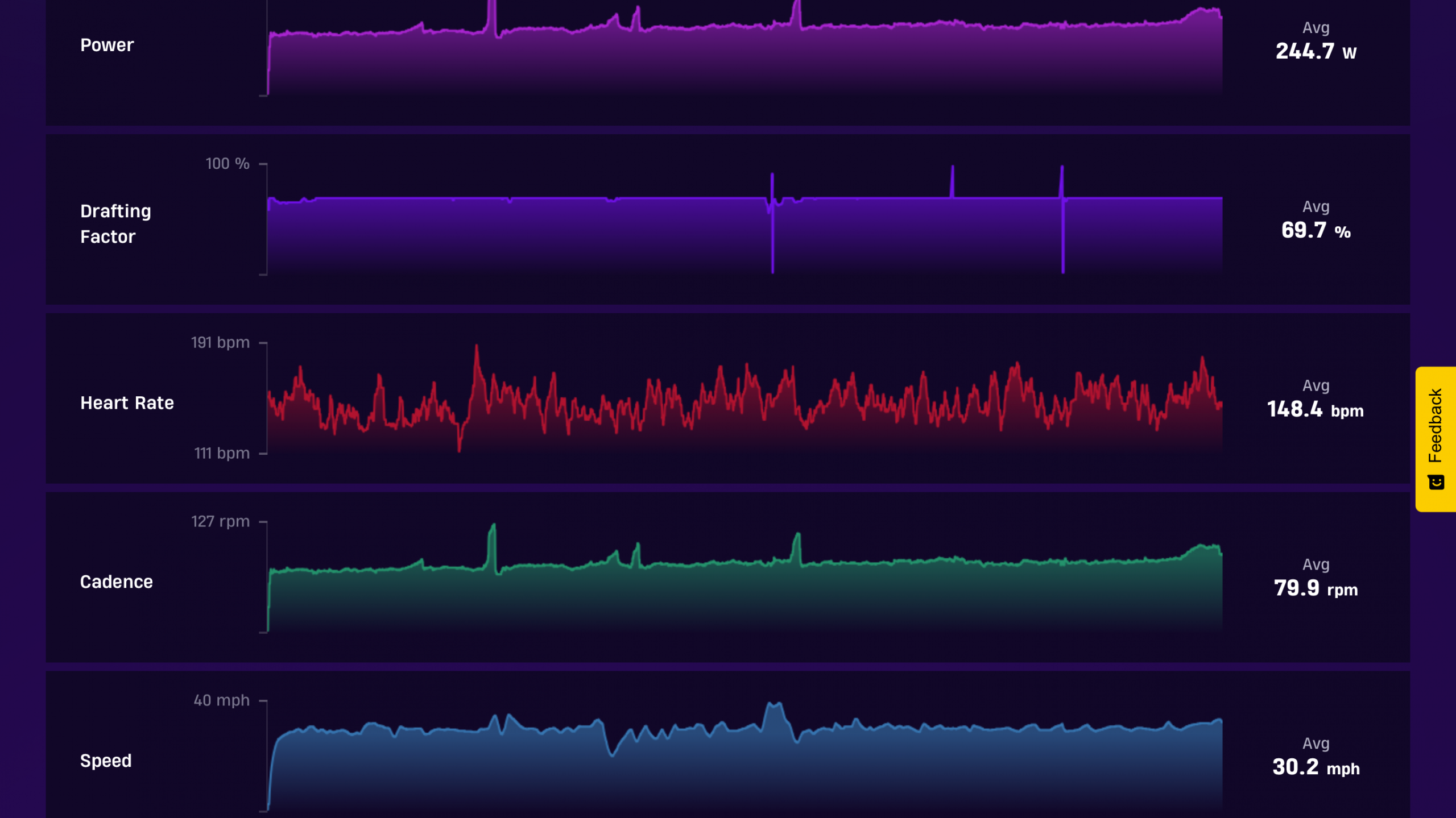
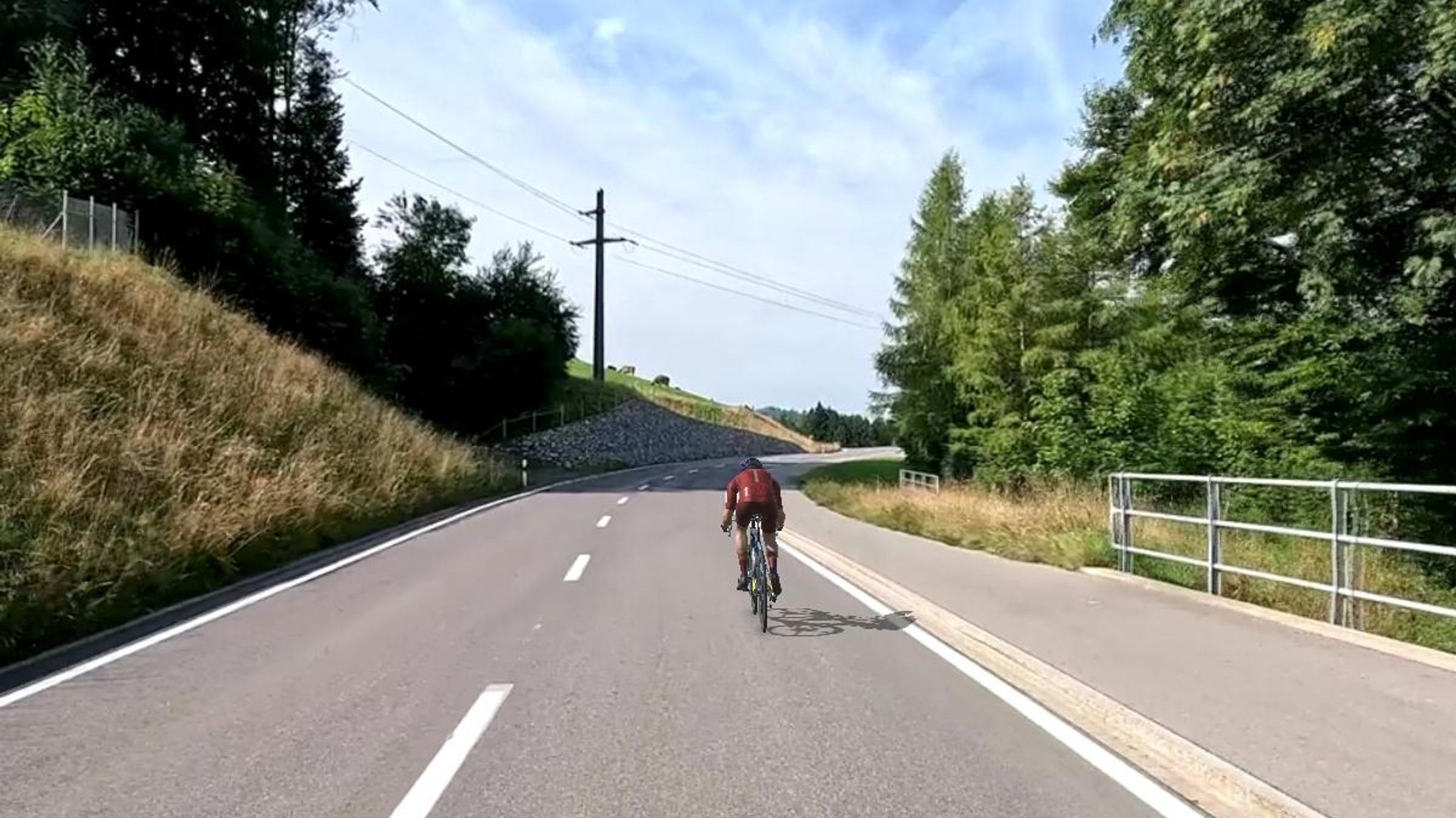
Seems he is riding with 2 pacing partners
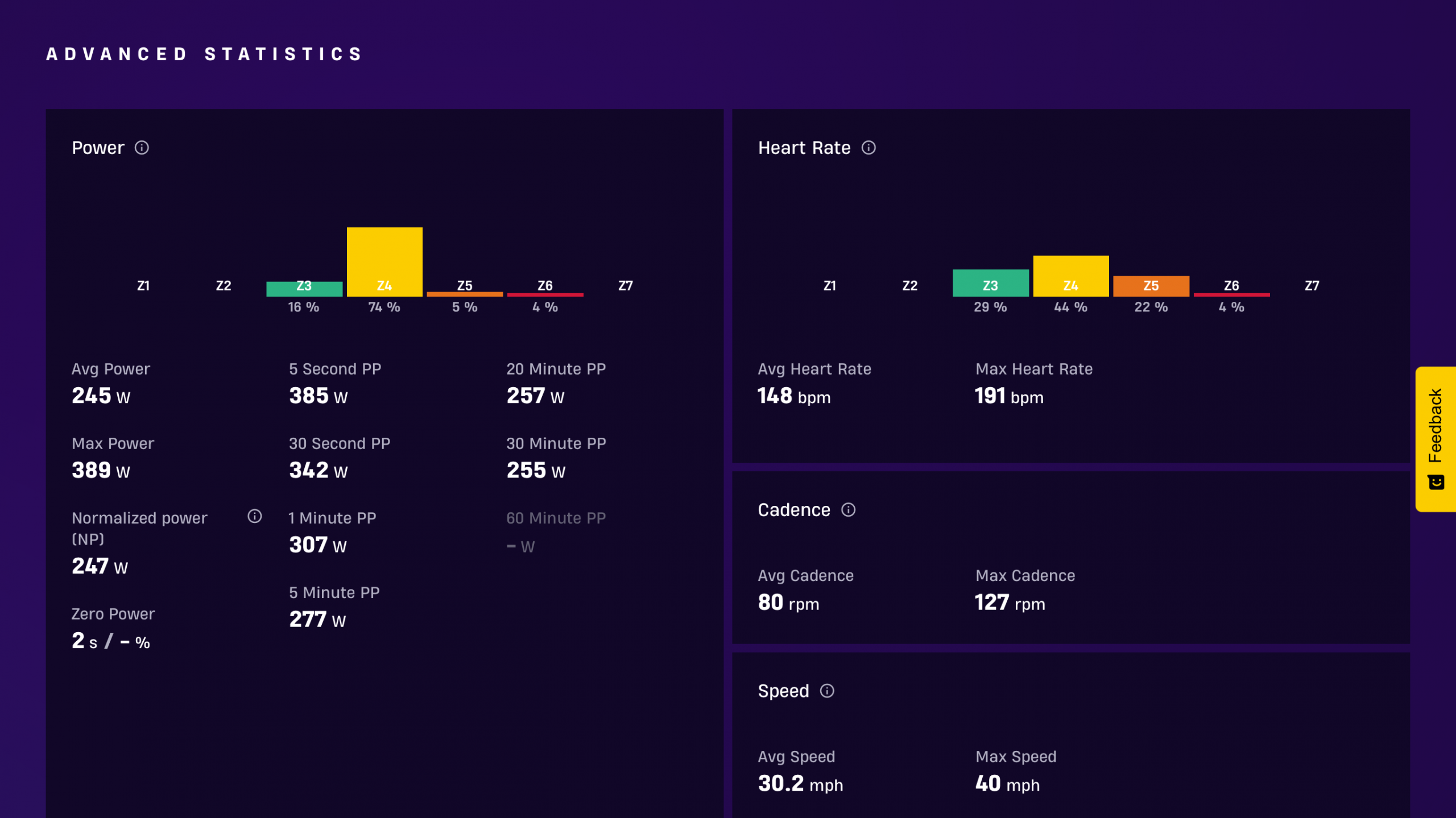
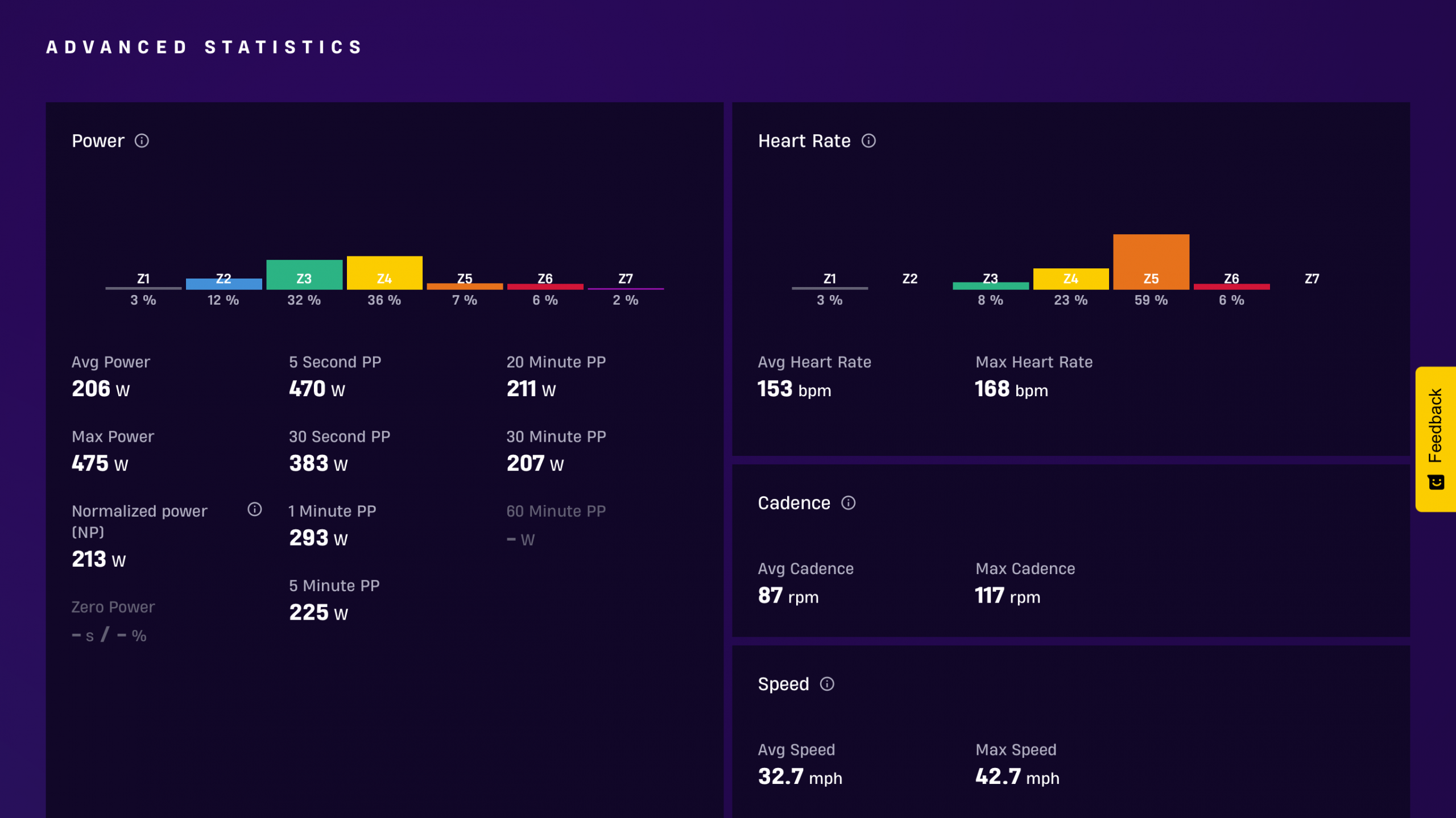
Screen captures from Rouvy of my addictive Rouvy Gelt “Coin” virtual equipment purchases…