So, having a self inflicted litany of orthopedic related issues bike fit for comfort has always been a priority for me. Stops on long rides to tune in comfort are a norm. As the fitting world grew with the application of once elite athlete “only” technologies trickling into to the amateur and then the everyday athlete world, things changed quickly. In my early cycling years, bike fit equaled the basics of can you lift the bike frame up an inch while straddling the frame? Okay, that works so let’s adjust the seat height so your knees don’t lock at the bottom of the stroke, all done now, enjoy the ride. Fast forward to 2020 and the “there’s an app for that” world brings us myVelofit a relatively inexpensive alternative to needing a high end bike shop fit, an exercise physiologist or a sports therapist. Maybe?

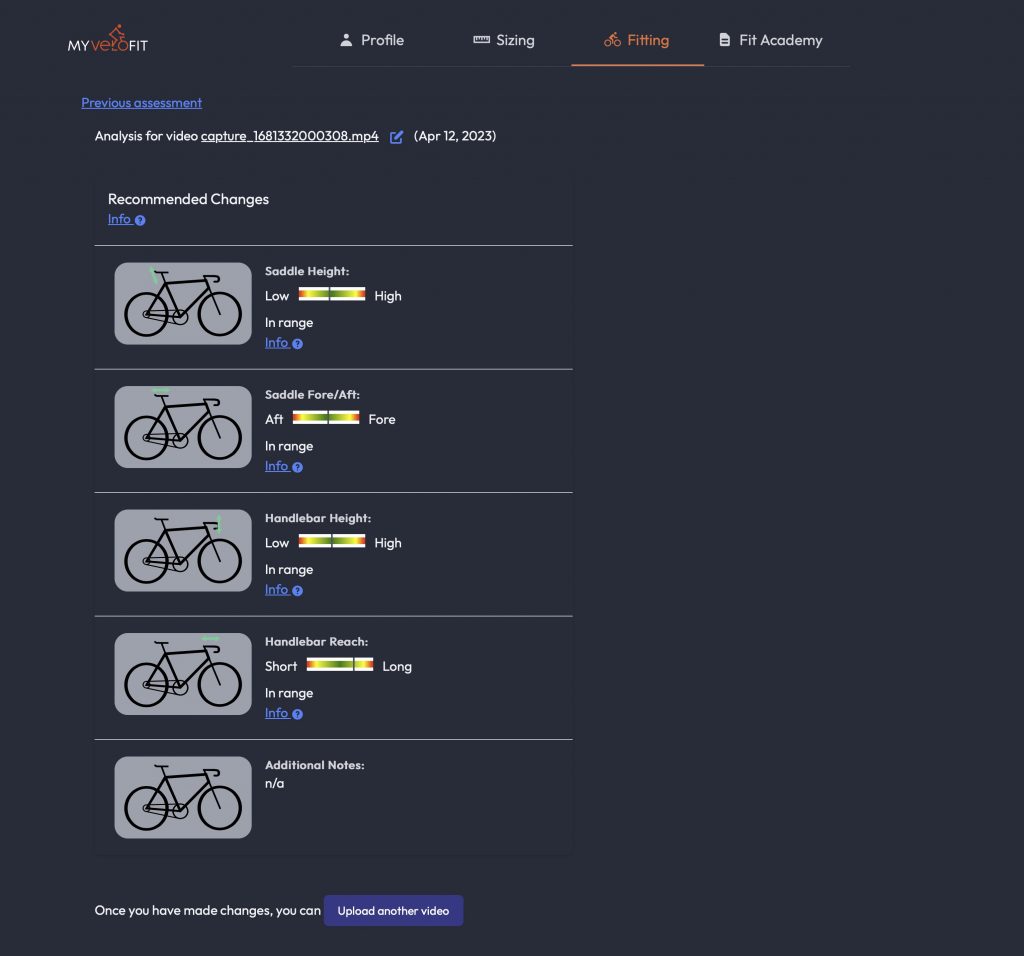
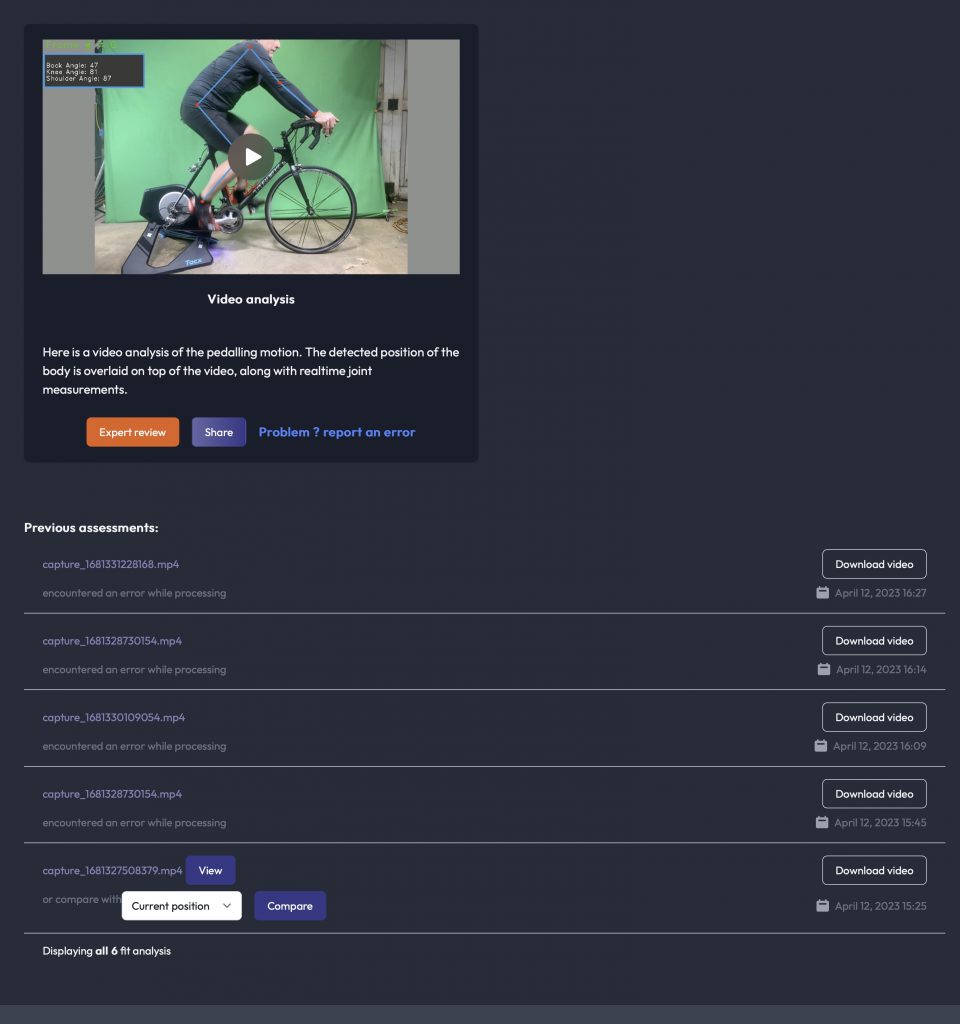
MyVelofit is an AI-powered online bike fitting tool designed to optimize your riding position from home. Using your smartphone, bike, and trainer, it analyzes video footage of your ride and mobility to deliver personalized fit recommendations. Developed by experts, including Jesse Jarjour, it leverages motion capture technology and a vast database of data points to assess saddle height, handlebar position, and more. For 35$ for a two-week single-bike fit or $75 for a year-long multi-bike plan, it’s a cost-effective alternative to traditional in-person fittings, which can cost hundreds and consume hours of your time. Through a simple process: record mobility tests and riding clips, you then receive a detailed report with actionable adjustments to enhance comfort, performance, and injury prevention. Giving only basic fit adjustments (single POV allows analysis only from one side, not fore or aft), so it lacks views for cleat or knee alignment and may not address complex issues like prior injuries (or funky body aberrations such as one leg longer than the other).
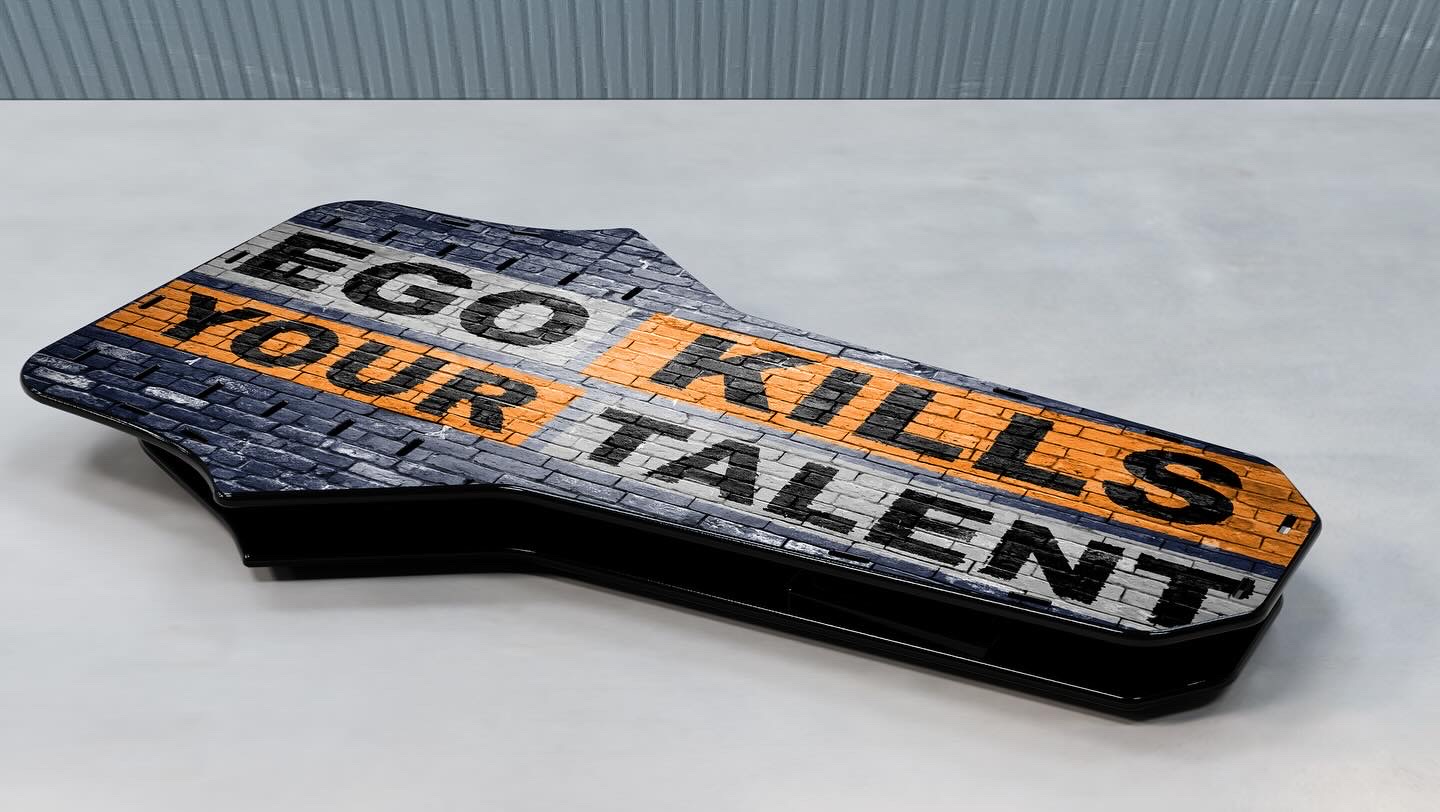
Constantly in want of convenience, I’m always looking for DIY solutions. When I first became aware of myVelofit, though throughly suspicious, I had to know if it was workable for me. Let the very unscientific anecdotal tests begin. My exploratory ride would be that of a 15 year old Trek OCLV 5200, conveniently enough, already mounted inside as my trainer ride. The last time I had this bike fitted was over a year ago after developing some hip pain issues. So itwas due. Also, I was anxious to test whether or not my rocker board setup would aide or interfere with a fit (disclaimer; I hoped that the rocker boards motion would allow for my position to be more true and settled). Then planning to go farther and maybe a tad more scientific, I would subject the same bike to two more fits. After the myvelofit baseline I would go to my orthopedist (a locally renowned TriAthlete and med journal published in a study of repetitive cycling injuries in youth populations) and then onto one of areas local fit experts for each of their adjustments. Not wanting to give test an already closely fitted bike, I made a some sham adjustments to the bars and the position of the levers on the drops. Would my rather kooky changes be noticed by any of the fitters?
This quick video speaks to my findings, again anecdotal but telling.
So did any of the fitters catch the rather radical hood placement on the bars? MyVelofit’s AI analysis probably could only detect forearm to elbow to shoulder positioning and therefore would not return positioning problem. Even though my screwy adjustment would be real world painful, myVelofit is not able to detect nuanced hand to bar, the fore/aft or rotation of the foot to pedal relationship. Another limit as previously stated is the lack of analysis from both sides and the front or rear. So with AI a fail, I was hoping that the physiology backed fit would question the forced wrist position — but it went unnoticed. In the end, only the local expert noted the visually distracting and potentially dangerous for road use and ergonomically hazardous positioning. Chalk one up for the human with and a more basic but intuitive approach.
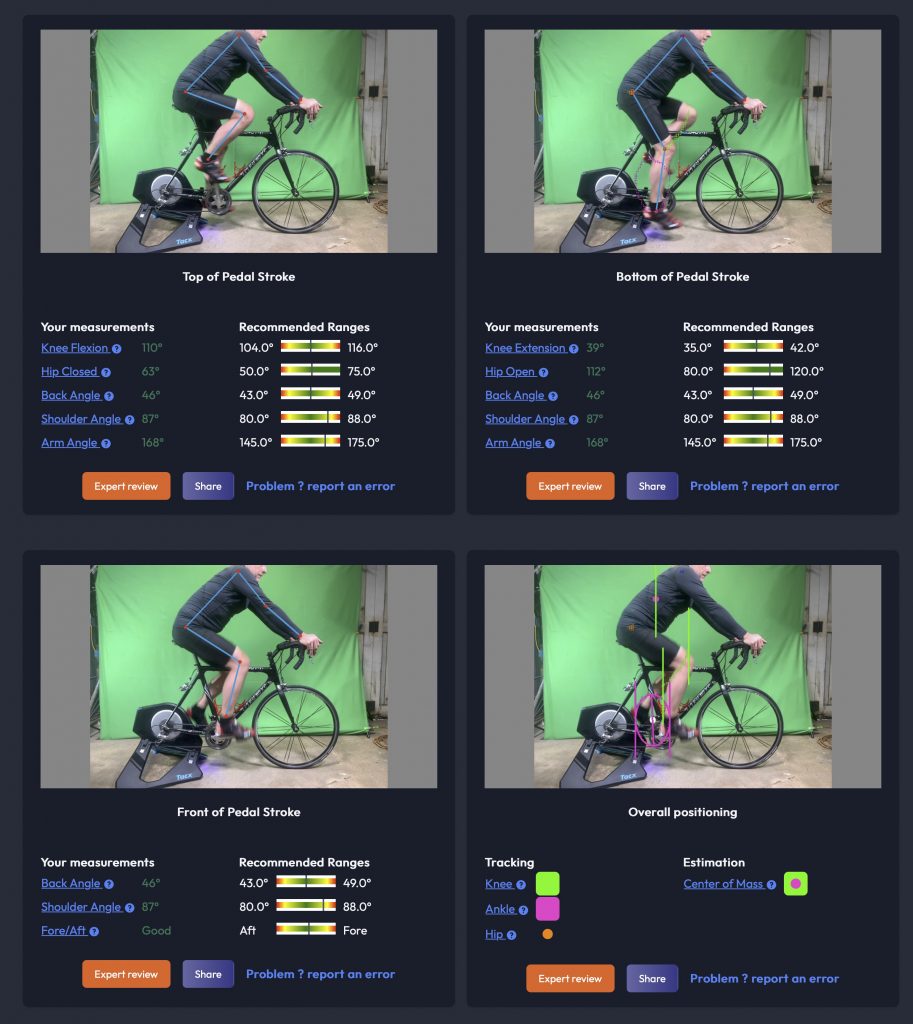
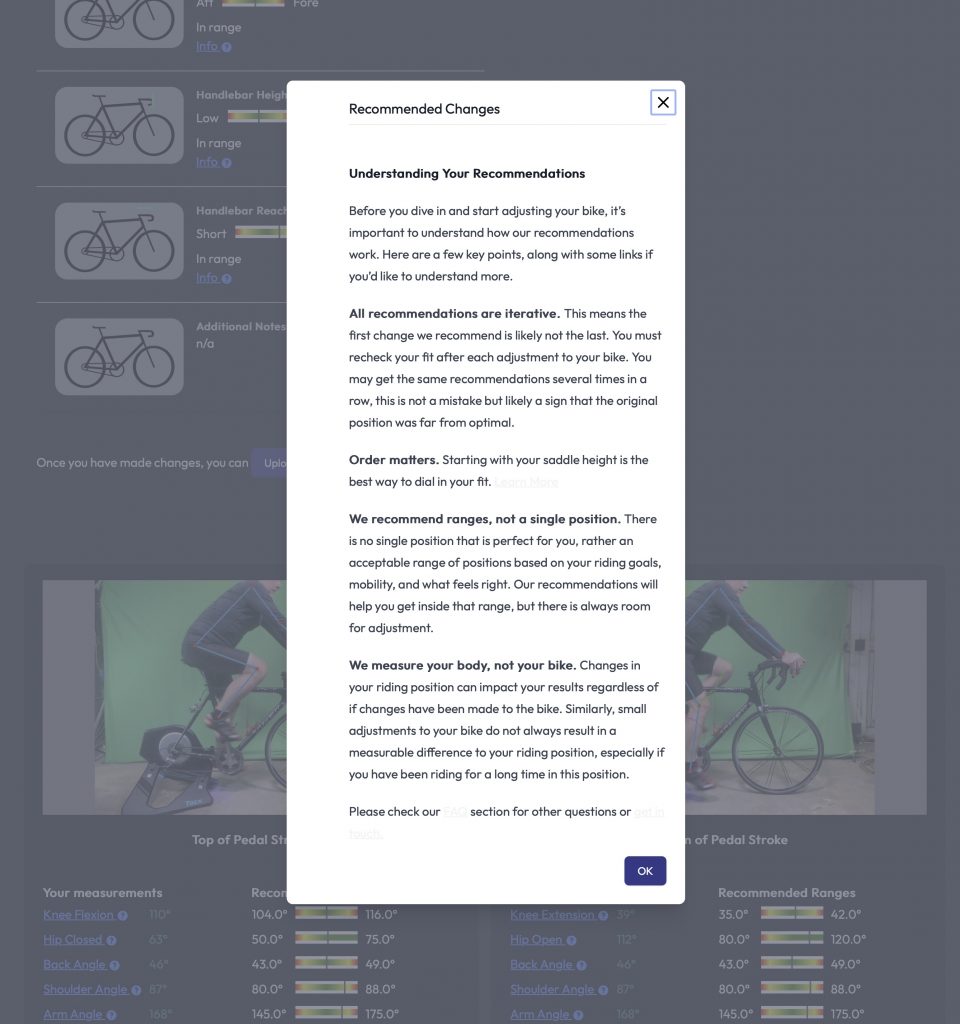
As for the theory of fitting the bike while using the rocker board, the results were negligable. So I can finally put to bed the fear I always harbored of the static bike fit. My fear was that a totally fixed bike would never allow me to settle into my normal riding position, thus not obtaining an accurate fit. The difference in positioning turned out to be so negligible that changes wouldn’t be merited.
All said, myVelofit isn’t a full substitute for professional fittings that require hands-on expertise. Though, it gets you really close and with its 30-day money-back guarantee, you can give it a spin without risk. Enjoy the ride.
Support our store